|
Curtains for Your Arts & Crafts Home
Curtain Basics • Fabric Choice • Mounting • Measuring |
||
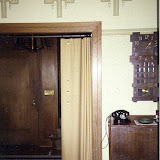
One of the most effective means of creating an Arts & Crafts style interior is the use of appropriate window treatments. Curtain Basics Simplicity and utility are the main ideas to keep in mind when choosing window treatments for your home. While the Arts & Crafts era saw a trend away from the voluminous amounts of drapery typical of Victorian times, it was still common to have two sets of curtains at the window - sheer curtains next to the window and over-curtains of a heavier fabric. Valances were also fairly common in the Arts & Crafts style home, as were roller shades (generally mounted behind a sheer curtain or a valance). Portières (curtains at interior doorways) were another common feature in homes of the era. Sometimes curtains are not necessary for any of the functional requirements above but solely for their decorative effect, to add color and pattern or to help recreate the cheerful, comfortable, friendly atmosphere of an Arts & Crafts room. To begin determining the appropriate window treatment for your home first ask yourself how you want the curtains to function. Do you want the curtains to filter light, to offer protection from sunlight to furnishings, or do you wish to maximize the amount of light into the room? How much insulation do you need them to offer? Do you desire them to offer privacy or to obscure an uninteresting view? You may have different requirements at different times of the day or over the seasons which require more than one type of curtain. The following information will help in determining the best choice of fabric and hanging treatment for curtains for your home. |
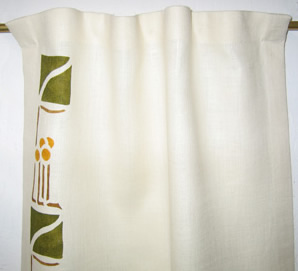
How to order curtains We make curtains to order for your window sizes in your choice of fabric and design. Hand Stencilled designs are shown in this portfolio
~ ~ ~ ~ ~ Hand Embroidered Arts & Crafts Curtains
Email us with your choices of fabric, design and window measurements, for a quote.
A limited number of sample panels and already made curtains are available for sale in our online store, click here to see the current selection. |
|